







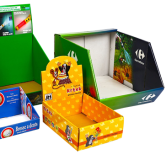

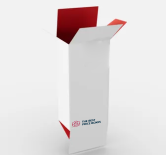

The simplest way to get a free dieline is to ask the company that will make your boxes for one in your exact size. A manufacturer has to draw the dieline for its own board and machines anyway, so most will send it before you order. We do: send us the inside dimensions and the box style, and a specialist replies within one business day.
There are two other routes, stock templates and online generators. Both are useful if you know what they cannot do.
1. Ask your manufacturer for one in your size
This is the route we recommend, because the dieline you design on is then the one your boxes are made from. Send:
- The box style, or a description of the product if you are not sure which style fits
- The inside dimensions, length by width by depth (our box measuring guide shows how)
- A rough quantity
- The material, if you already know what you want
You get back a dieline you can open in Illustrator and most other design apps, drawn to the size you gave. There is no charge for it and no obligation to order. It is part of the free design help every customer gets.
2. Start from a stock template
Stock templates are dielines drawn for common sizes of a style. They are good for early design work, mockups and showing an idea to a client before you have settled on a size. Our style pages list the stock sizes we have drawn for each style, with the flat size of each one. Downloadable files for those sizes will go on each page once our production team has checked them. Until then, every page shows the layout, and you can request the file in a stock size or your own.
3. Use a dieline generator
A generator draws a dieline from your dimensions in the browser, and many are free or free to try. The shape is usually right. What a generator cannot know is the board your printer will use, and on thicker board the panels have to be adjusted so the box closes properly. Use one to explore, then send the result to your printer to confirm or replace before the artwork is final.
What to check before you put artwork on any dieline
- It is the style you will actually order. A straight tuck end and a reverse tuck end look almost the same flat, but the tucks open on opposite panels.
- You know which dimensions it was drawn to. Inside dimensions are the usual standard, but ask.
- Every line type is clear. Our guide to dieline line types shows what to look for.
- The printer has confirmed it for the board they will use.
Send the inside dimensions and the box style, and a specialist replies within one business day. Free design help and no minimum order.
Request a dieline