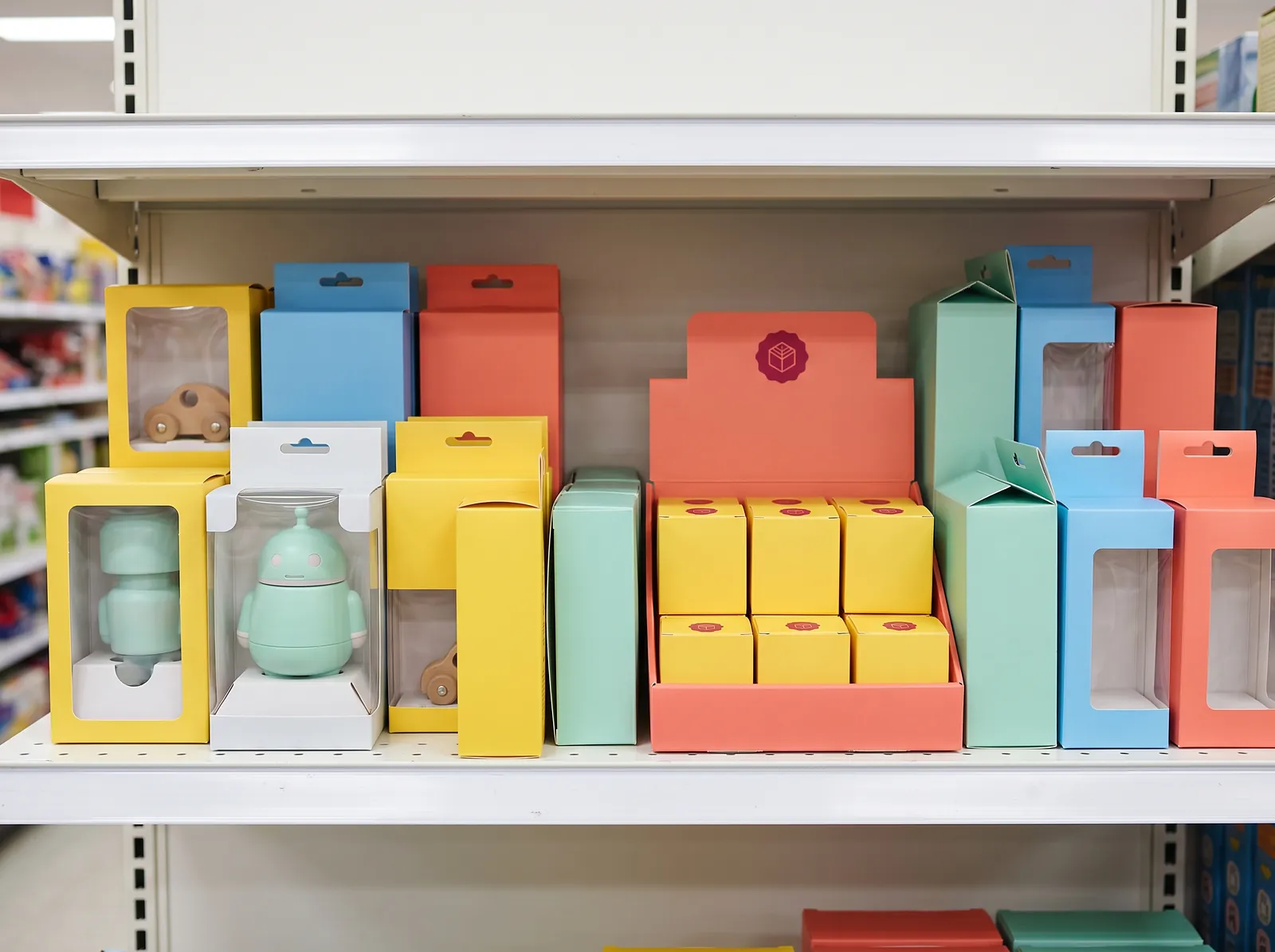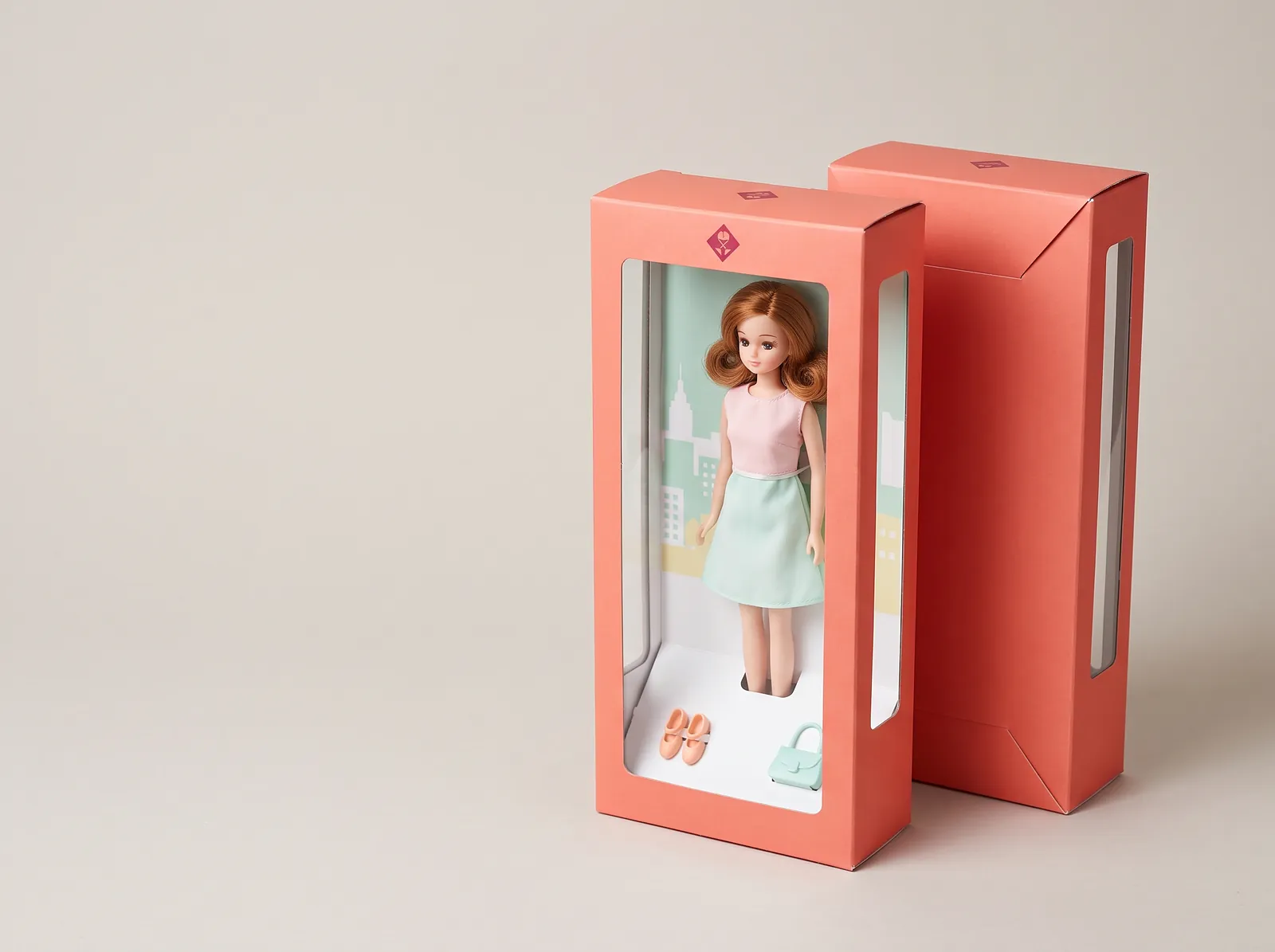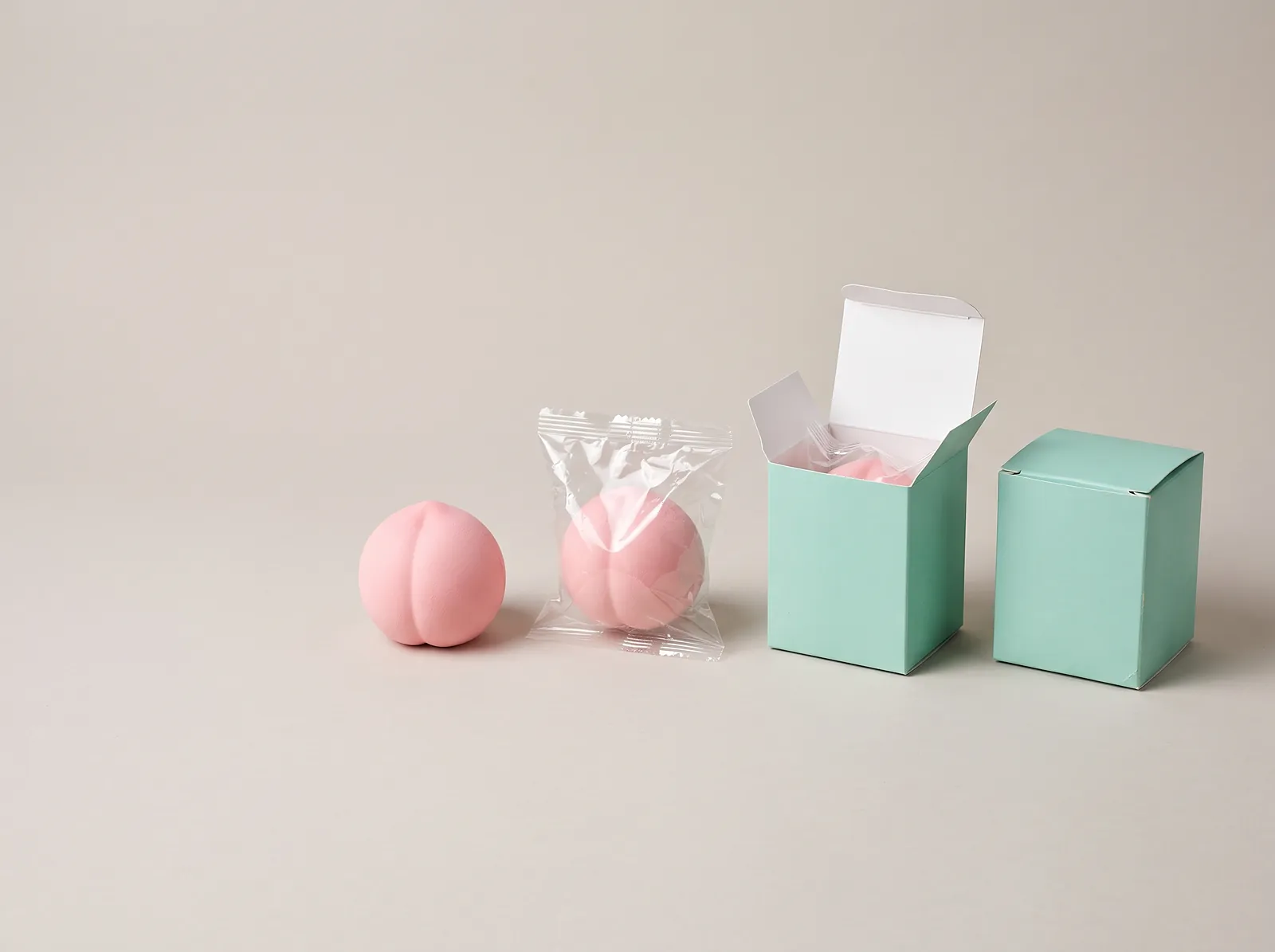
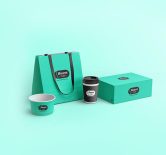


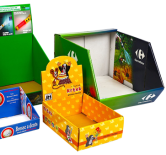
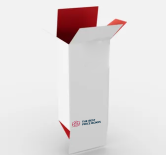
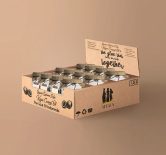

Custom retail boxes are printed paperboard cartons made to your exact product size and sold on shelves, pegs or counters. The right style follows the display method: tuck-top or one-piece for shelves, hang-tab or five-panel hanger for pegs, pillow for small light items. TBPB has no minimum order, so you can order one box or ten thousand.
Reviewed by the TBPB packaging team, October 2026.
Quick facts
| Item | Answer |
|---|---|
| Minimum order | None. Order one box or thousands |
| Common styles | Tuck-top, hang-tab, five-panel hanger, one-piece, pillow |
| Typical use | Shelf, peg and counter display for retail products |
| How to size | Product height, width and depth plus clearance and any insert |
| Quote needs | Dimensions, quantity, style, one-color or full-color print |
Which retail box style should I choose?
Pick the style by how the store will display the product, because that rules options in or out quickly. A shelf wants a box that stands and faces forward. A peg wants a tab with a hole. A checkout counter wants something small that reads from three feet away.
| Display method | Styles to look at | Watch out for |
|---|---|---|
| Shelf | Tuck-top boxes, one-piece boxes | Front panel is the only thing the shopper sees, so put the product name there |
| Peg hook | Hang-tab boxes, five-panel hanger boxes | Product weight pulls on the tab, so heavier items need the sturdier construction |
| Counter or gift add-on | Pillow boxes | Light, small items only |
If a retailer has already told you the shelf depth or peg length, send it with your quote request. It changes the dieline.
How do I size a retail box to my product?
Measure the product at its widest, tallest and deepest points, add clearance, and give us those as inside dimensions. Guessing from the outside of a competitor box is how people end up with a carton that bows or rattles.
- Measure length, width and depth of the product itself, in inches, to the nearest 1/16.
- Add clearance on each dimension. About 1/8 inch per side is a reasonable start for a hard item; soft goods and anything in a tray need more.
- Add the thickness of any card, tissue or insert that goes inside.
- Order one sample first. Close the box, shake it, stand it on a shelf, and hang it if it has a tab.
Worked example: a lip balm tube measures 4.5 x 0.9 x 0.9 inches. With 1/8 inch clearance on every side, the inside size becomes 4.75 x 1.15 x 1.15 inches. If you add a 1/16 inch paper insert, the depth and width go to about 1.3 inches. That last step is the one most first-time buyers skip, and it is why a snug carton ends up too tight to close.
What does a retail box need to print so it sells?
The front panel carries the sale: brand, product name, one clear benefit, and a size or count. Everything else supports it. Put barcode, ingredients or usage text on the back or side, and keep the front clean enough that it reads at arm’s length.
Print coverage changes the price more than most buyers expect. A one-color box with a strong logo can look sharper than a busy full-color carton, and it quotes differently. Ask for both and compare. Foil, special coatings and other finishes depend on style and board, so ask us to confirm for your spec rather than assuming.
If your product is regulated, such as food, cosmetics or supplements, you own the label and legal copy. We print the artwork you supply. Check the rules that apply to your product before you finalize the file.
When is a retail box the wrong choice?
A paperboard retail box protects a product on a shelf. It does not protect it in a shipping box without help. If you sell online, the retail carton usually goes inside a mailer box or shipper. Also skip a thin carton for a heavy product on a peg; it will sag and look cheap within a week.
Gift sets and presents are a separate decision. Our gift box styles and display boxes are built for that, and our guide to kraft versus white boxes covers the material choice. Small light items may suit the style in our pillow box guide.
Should I order one sample before a full run?
Yes, and it costs you nothing in minimums because there are none. A single printed carton tells you things a PDF never will: if the tuck holds closed, if the front panel text reads from a few feet away, and if the product slides out when the box is tilted. Put it on a real shelf, or a real peg, and look at it the way a shopper walking past would.
Plenty of owners find one small thing to fix on the sample, such as a barcode too close to a fold or a logo too small. Fixing that on one box is cheap. Fixing it on a thousand is not. Once the sample is right, reorder at the quantity you need.
Questions buyers ask
Is there a minimum order for custom retail boxes?
No. Order one box or ten thousand. A single prototype is worth ordering before a large run, because you can check fit and shelf look in your hands before you commit to volume.
Which retail box style is cheapest to produce?
Usually the simple one-piece or tuck-top cartons, because they need no extra tabs or inserts. Print coverage, board and quantity move the price more than the style does, so ask for a quote on two styles and compare them line by line.
How much clearance should I leave around my product?
Start with about 1/8 inch on each side for a rigid item, and more for anything soft or anything that sits in an insert. Measure the product at its widest, tallest and deepest points, then add clearance to each. Tell us if you plan to add a card, tissue or insert.
Can a retail box hang on a peg?
Yes, with a hang-tab or five-panel hanger style. The tab needs a punched hole that matches the peg width at your retailer, and the box has to carry the product weight without sagging. Send us the peg dimensions and product weight and we will confirm the right construction.
Do you print on the inside of the box?
Ask us to confirm for your spec. Printing, coatings and finishes vary by style and board, and we would rather confirm than guess. Send the style and quantity through the quote form.
How do I get a quote and a dieline?
Send the inside dimensions, style, quantity and print coverage through the quote form. We return a dieline and a price. Even a quantity of one is a valid request.
How to order
Send the inside dimensions, style and quantity through the quote form, even if you only need one. We return a dieline and a price. If you hold a written quote for the same specs elsewhere, bring it; TBPB’s price-beat guarantee means we beat it. Free design help, free samples and free shipping apply too. Browse the full custom retail boxes category to see the styles.
Is there a minimum order for custom retail boxes?
No. Order one box or ten thousand. A single prototype is worth ordering before a large run, because you can check fit and shelf look in your hands before you commit to volume.
Which retail box style is cheapest to produce?
Usually the simple one-piece or tuck-top cartons, because they need no extra tabs or inserts. Print coverage, board and quantity move the price more than the style does, so ask for a quote on two styles and compare them line by line.
How much clearance should I leave around my product?
Start with about 1/8 inch on each side for a rigid item, and more for anything soft or anything that sits in an insert. Measure the product at its widest, tallest and deepest points, then add clearance to each. Tell us if you plan to add a card, tissue or insert.
Can a retail box hang on a peg?
Yes, with a hang-tab or five-panel hanger style. The tab needs a punched hole that matches the peg width at your retailer, and the box has to carry the product weight without sagging. Send us the peg dimensions and product weight and we will confirm the right construction.
Do you print on the inside of the box?
Ask us to confirm for your spec. Printing, coatings and finishes vary by style and board, and we would rather confirm than guess. Send the style and quantity through the quote form.
How do I get a quote and a dieline?
Send the inside dimensions, style, quantity and print coverage through the quote form. We return a dieline and a price. Even a quantity of one is a valid request.