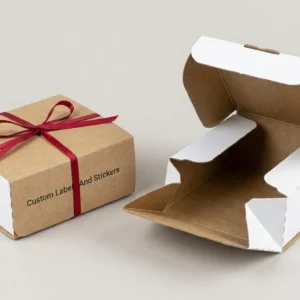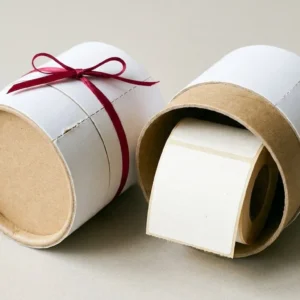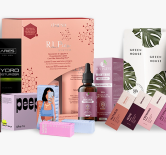
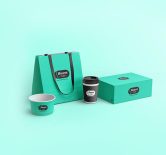
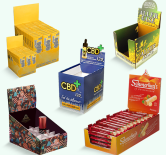

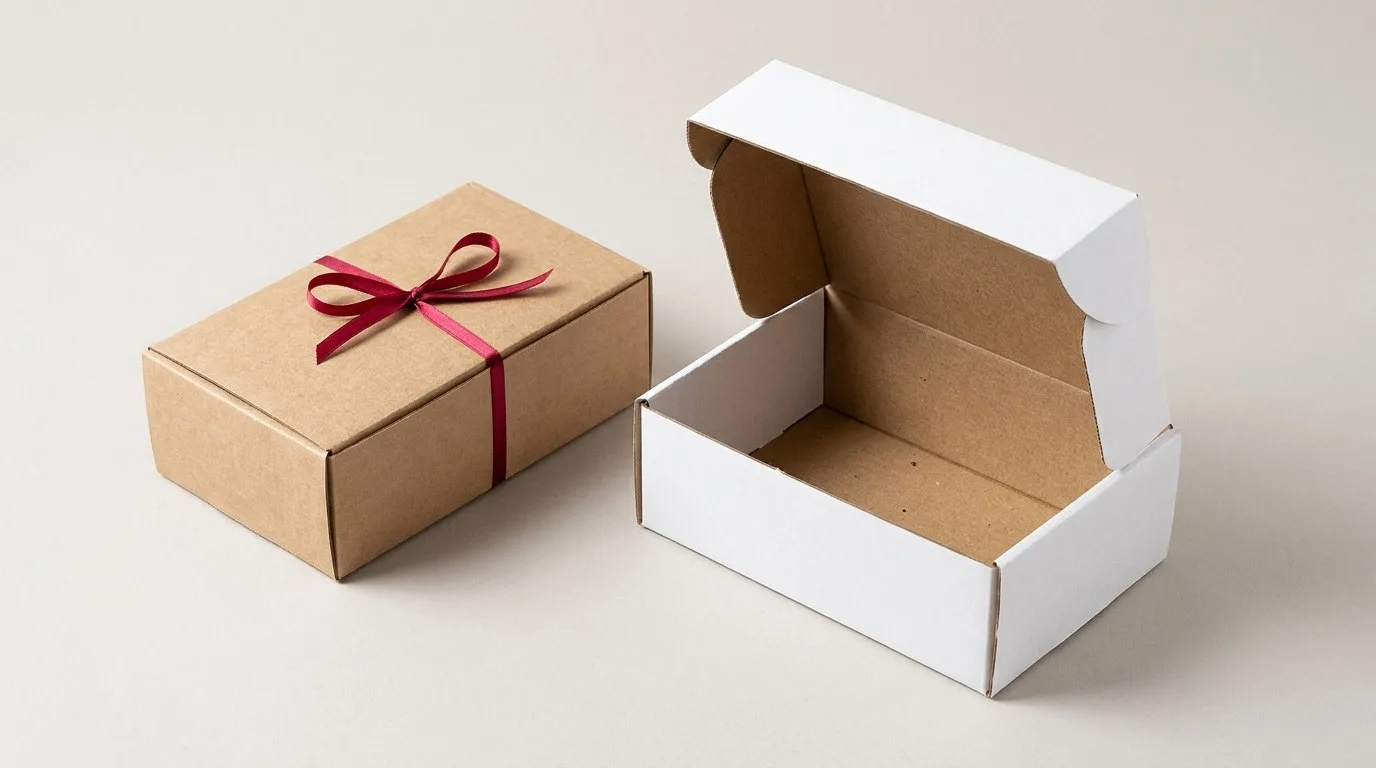


A custom packaging label is a printed adhesive label cut to a size and shape that fits your package, used for branding, sealing, product information or shipping marks. TBPB prints them with no minimum order, and if you bring a written quote for the same specs, we beat it.
What packaging labels do that a printed box cannot
Printing directly on every box makes sense when the artwork never changes. Most small brands do not live in that world. Flavours rotate, ingredients change, a batch number needs to be unique, or one stock mailer has to serve three products. A label lets you keep one plain box and change the face of it. It also lets you test a new product without paying for a printed carton before you know it sells.
Labels also fix a different problem: an existing package that looks generic. A bag of coffee, a tin of balm, a plain kraft mailer, a glass jar. Add a label and the same item looks like a finished retail product.
Choosing the right label material
The face stock decides how the label looks and how it lasts. Paper stocks are the usual choice for dry goods and boxes, and they take ink well. Film stocks, such as polypropylene, resist moisture and scuffing better, so they suit anything that gets cold, wet or handled. Clear film gives a no-label look on glass and plastic. If the product is going in a fridge, a shower, or a cooler of ice, tell us before you pick, since a paper label can wrinkle or lift in those conditions. Our waterproof labels page covers that case in more detail.
Adhesive matters just as much as the face. A permanent adhesive is the default. A removable one suits retail price-style labels, and a peelable label on a returnable item avoids damage to the package. Surface texture is the trap: kraft paper, uncoated board and textured bags are rougher than coated board, so mention the substrate so we can recommend an adhesive that actually grips.
Shape, size and format
- Standard shapes: round, oval, square, rectangle, and custom die-cut outlines that follow a logo
- Seal labels, which cross the lid of a box to act as a closure strip
- Product labels sized to a jar, bottle or tube wrap
- Roll format for applying labels by hand or on a label applicator, a format covered under custom roll labels
- Print in full-colour CMYK, with Pantone matching, and matte or gloss finish
Measure the flat area where the label goes, not the whole package. Leave a margin of at least a few millimetres from any edge, curve or seam, because a label sitting on a bend will lift over time. For round items, check that the label length does not overlap itself awkwardly, or that it wraps with a clean overlap on purpose.
Where labels beat other options
If you want your whole brand experience on the box, a printed carton is stronger. If you only need a small seal or a variable panel, a label does the job at lower commitment. Private label brands often combine both: a plain box plus a custom label, which is why our private label packaging page is worth reading if you resell products under your own name.
If your product is food, cosmetics or supplements, ingredient lists, warnings and claims on the label are your responsibility. We print the artwork you supply, so confirm the required wording with your own regulatory adviser first.
Send your label size, the surface it will stick to, and a quantity, even one, and we will quote it. You can also browse the full stickers and labels range.
Frequently asked questions
What are custom packaging labels used for?
They brand, seal and identify packages. Typical uses are logo stickers on mailers, ingredient panels on jars and bags, seal labels across box flaps, batch and flavour labels, and thank-you stickers. One plain package can carry several different labels.
Is there a minimum order for custom labels?
No. TBPB has no minimum order, so you can order a single sheet to test a new product, or thousands once the design is proven. Each label is printed to your size, shape and artwork.
Which label material should I choose?
Paper is the usual choice for dry goods and boxes. Film such as polypropylene resists moisture and scuffing, which suits cold, wet or handled products. Clear film works for a no-label look on glass. Tell us the conditions and we recommend one.
How do I size a label correctly?
Measure only the flat area where it will sit, not the whole package. Leave a few millimetres of margin from edges, curves and seams, since a label on a bend will lift. Send the dimensions and the surface and we confirm the size.
Will a label stick to kraft or textured packaging?
Often yes, but rough surfaces need the right adhesive. Kraft paper, uncoated board and textured bags grip differently from coated stock. Tell us the substrate and storage conditions, and we match the adhesive to the surface before printing.
Do you check ingredient or regulatory text on labels?
We print the artwork you supply and do not write or approve regulatory copy. Ingredient lists, warnings and claims for food, cosmetics or supplements are your responsibility, so check the wording with your own regulatory adviser before approving a proof.
More Custom Stickers and Labels
See the full Custom Stickers and Labels range, or explore related options with no minimum order and our best-price guarantee: