Cardboard Boxes

Custom cardboard boxes come in two families: corrugated for shipping and heavy items, and paperboard folding cartons for retail shelves. TBPB makes both to your size and artwork with no minimum order, and helps you pick the right board for your product.

Pricing depends on size, material and quantity. Tell us what you need and a specialist replies within one business day with a firm quote, a free dieline and a digital proof. No minimum order, free shipping.

Get an Instant Quote

icon-1

High Quality Offset Printing

icon-2

Best Quality Of Packaging

icon-3

Creative Packaging

icon-4

Eco friendly

MATERIALS

PREMIUM FINISHES

Shipping and Turnaround

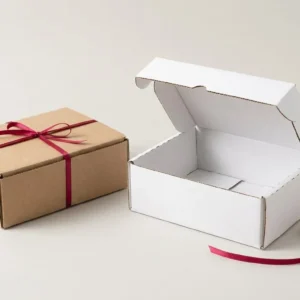
Standard production runs 7 to 14 business days, depending on the box style, print method, and finishing you choose, a simple kraft mailer moves faster than a box with foil stamping or spot UV. Need it sooner? We handle rush requests case by case, so email us your deadline before you place the order and we’ll tell you straight whether we can hit it.

Shipping is free on every order, in the United States and internationally. We ship with FedEx, UPS, USPS or DHL depending on your location and order size, and you’ll get a tracking number as soon as your order leaves our facility.

  • Standard turnaround: 7 to 14 business days
  • Rush orders: handled case by case, contact us with your deadline
  • Shipping: free worldwide via FedEx, UPS, USPS, or DHL
  • Tracking: provided once your order ships
A courier handing a kraft shipping box out of a delivery van

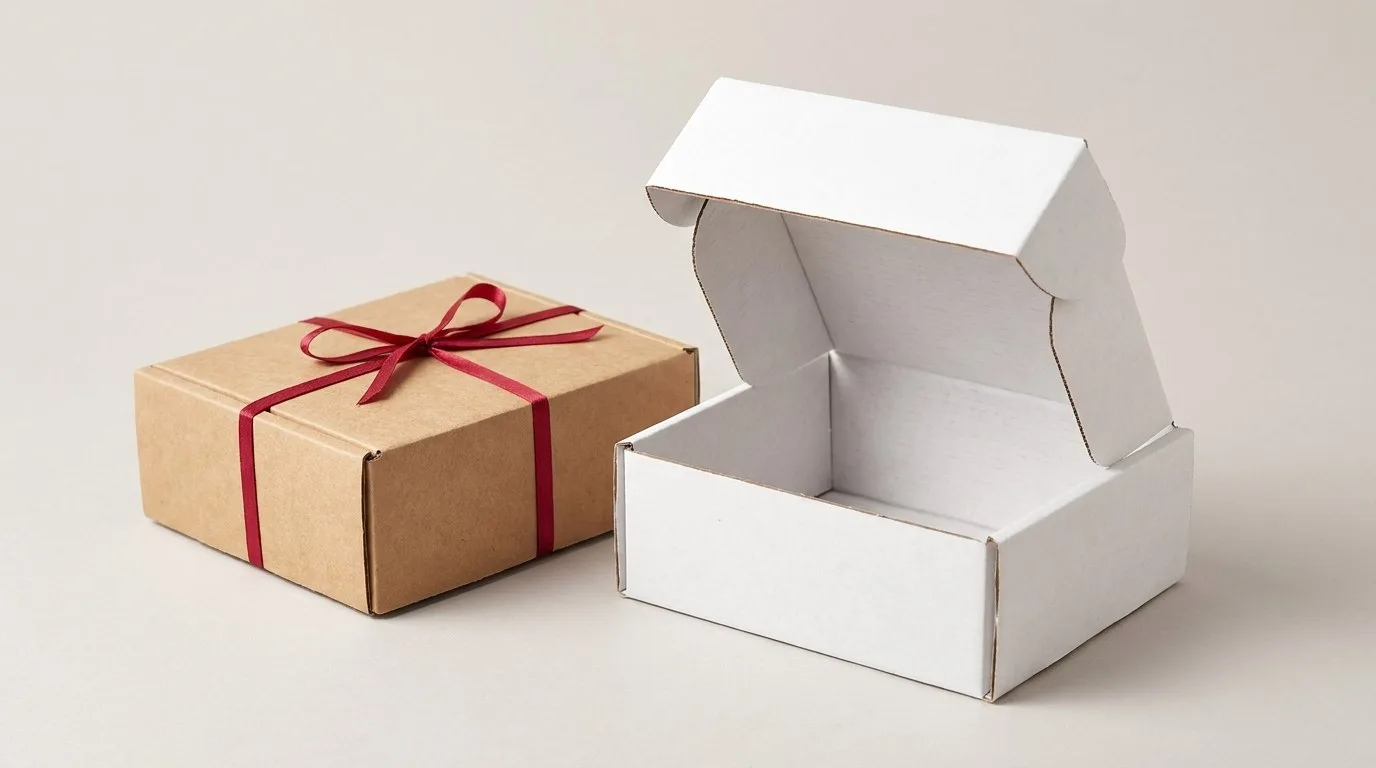
Cardboard is a loose term that covers two different materials: corrugated board for shipping and protection, and paperboard for retail cartons. TBPB makes custom cardboard boxes in either with no minimum order, and we beat any written quote on matching specs.

Corrugated or paperboard: the first decision

Corrugated has a fluted layer between two flat liners, which gives it stiffness and cushioning. Paperboard is a single thin sheet, folded and glued into a carton. Corrugated survives shipping; paperboard looks good on a shelf and prints crisply. Plenty of orders use both: a printed paperboard carton for the product, packed inside a corrugated shipper. If your product goes straight to the customer in a parcel, start with corrugated. If it sits on a store shelf, start with paperboard.

Flute size and board weight

  • E-flute: thin and smooth, prints well, suits lighter products and retail-style mailers
  • B-flute: more crush resistance, a common choice for general shipping
  • Double wall: for heavy or tall items and stacked pallets
  • Paperboard folding carton: usually 16 to 24 pt, for lighter products and shelf display

Thicker is not always better. A heavy board costs more to ship and can make a small box feel clumsy. Match the board to the weight of the contents and the shipping route.

Sizing a cardboard box

Measure the product, then add clearance. For a paperboard carton, about 1/8 inch per side is the usual starting point. For corrugated shipping, add room for padding on every side, and remember that inside dimensions are what count. Always give the length first, then width, then height, measured with the opening facing up. A wrong order of dimensions is the most common cause of a box that does not fit. A foam insert or a paperboard divider can keep items from shifting.

Print and finish

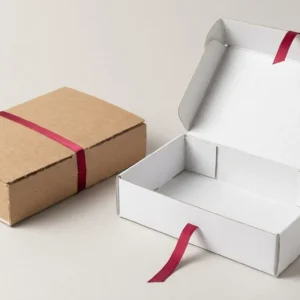
Corrugated can take simple one or two color print, or a full-color litho-laminated surface. Paperboard takes CMYK and Pantone with aqueous, matte or gloss coating, soft-touch lamination, foil and embossing. If you want a printed outer box that opens well, look at tuck top boxes, and for shelf-ready products with a hanging slot, hang tab boxes.

Next step: send product dimensions and a quantity, even one, and TBPB draws the dieline and quotes it.

Frequently asked questions

  1. Is there a minimum order for custom cardboard boxes?

    No. TBPB has no minimum order, so you can order one box as a sample or thousands for a full run. Send the size and artwork and we quote the exact quantity.

  2. What is the difference between corrugated and paperboard?

    Corrugated has a fluted middle layer between two liners, giving it strength and cushioning for shipping. Paperboard is a single sheet used for retail cartons. Corrugated protects; paperboard prints cleaner and looks better on a shelf.

  3. Which flute should I choose?

    E-flute is thin and prints well, good for lighter items. B-flute resists crushing and suits general shipping. Double wall is for heavy or tall loads. Tell us the weight and route and we recommend the build.

  4. How do I measure for a cardboard box?

    Measure the product, then add clearance: about 1/8 inch per side for a paperboard carton, and more padding room for corrugated shipping. Give length, width and height in that order, measured as inside dimensions.

  5. Can I print on corrugated boxes?

    Yes. Corrugated takes simple one or two color print or a full-color laminated surface. For the sharpest color, paperboard cartons print better. Many brands print a paperboard carton and pack it in a plain corrugated shipper.

  6. Do I need inserts?

    If the product can slide or is fragile, yes. Foam or paperboard inserts hold items still and reduce damage in transit. Send us the product and we design the insert with the box.

Cardboard boxes: corrugated for shipping, paperboard for the shelf

Custom cardboard boxes cover everything from printed retail cartons to corrugated shippers. The word describes two materials: paperboard, which is thin and prints beautifully, and corrugated board, which has a fluted layer for strength and cushioning. Which one you need depends on whether the box sits on a shelf or travels in a parcel. TBPB makes both to your exact size and artwork with no minimum order, so you can order one sample or a full production run.

custom cardboard boxes no minimum
custom cardboard boxes US

The one question that picks the right cardboard box

Start with how the box will travel. Parcel shipping calls for corrugated, with E-flute for lighter loads and B-flute or double wall for heavier ones. Retail display calls for paperboard, usually 16 to 24 pt. Measure the product, allow clearance, and give the dimensions as length, width, height. If you want a printed unboxing experience and safe delivery, use a printed paperboard carton inside a corrugated shipper. Describe the product and the route and we will suggest the board.

Our Related Products

You’ve successfully crafted an outstanding product, and now it’s our turn to contribute by designing distinctive custom packaging materials. Explore our array of boxes to discover the perfect match for your requirements!

Get Free QuoteCall Now
Custom Packaging With No Minimum Order
No Minimum Order Packaging Guide · Free Samples and Proof · Cosmetic Packaging · Food Packaging · CBD Packaging · Cannabis Packaging · Apparel Packaging · Types of Folding Cartons · Gable Boxes · Window Boxes · T-Shirt Boxes · Hat Boxes · Burger Boxes · Coffee Cups · Donut Boxes · Types of Mailer Boxes · Chocolate Boxes · Perfume Boxes · Pizza Boxes · Electronics Boxes · Pet Product Boxes · Pillow Boxes · Rigid Boxes Guide · Tea Boxes · Hemp Boxes · Pre-Roll Boxes · Cigar Boxes · Custom Boxes · Mailer Boxes · Mylar Bags · Food Boxes · Rigid Boxes · Kraft Boxes · Soap Boxes · Candle Boxes · Gift Boxes · Coffee Boxes · Cosmetic Boxes · CBD Boxes · Display Boxes · Candy Boxes · Subscription Boxes · Cake and Bakery Boxes · Stand-Up Pouches · Apparel Boxes · Jewelry Boxes · Supplement Boxes · Vape Boxes · Double Wall Boxes · Multi-Depth Boxes · Half-Slotted Boxes · Partial Overlap Boxes · Snap Lock Mailer Boxes · Literature Mailers · Hexagon Boxes · Heart Shaped Boxes · Neck and Shoulder Rigid Boxes · Pallet Display Boxes · Quad Seal Bags · Three Side Seal Pouches · Spouted Pouches · Drawstring Bags · Garment Bags · Molded Pulp Packaging · All Products · Packaging Blog
Packaging Guides
Mailer vs Rigid · Rigid vs Folding Cartons · Kraft vs White Board · Mylar vs Stand-Up Pouches