






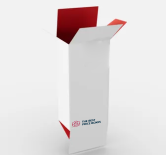
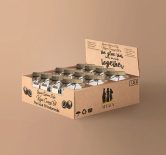
Yes, The Best Price Boxes makes custom seal-end boxes with no minimum order, and we will beat any written quote you already have. A seal-end carton has glued top and bottom flaps that you tear or cut to open, which makes it tamper-evident and a fit for pharmaceutical and dry-food products. It is also the strongest folding carton closure available and the one built for automated packing lines.
Custom seal-end box specs
| Spec | What you get |
|---|---|
| Minimum order | None. One carton or a full production run. |
| Construction | Glued top and bottom flaps, opened by tearing or cutting. Also called a glued end or a sealed end carton. |
| Variants | Straight seal end, reverse seal end, seal end with a tuck top, and seal end with an auto bottom. |
| Board | Paperboard, roughly 14 to 24 pt SBS or kraft. Heavier board where the contents have real weight. |
| Line ready | Ships flat as a glued sleeve, erects and fills on automatic cartoning lines. |
| Tamper feature | Optional perforated tear strip, or a tear tab, for a visible first opening. |
| Glue area | Coatings knocked out on the glue tabs so the joint bonds properly. This is specified on the die line, not left to chance. |
| Printing | Full color CMYK, Pantone spot colors, white ink on kraft, foil. |
| Finishes | Matte, gloss and soft touch lamination, spot UV, embossing, debossing, aqueous coating. |
| Sizes | Built to your product dimensions rather than to a catalog. |
| Design | Free. Die lines, mockups and revisions included. |
| Samples | Free. |
| Shipping | Free. |
What a seal-end carton is, structurally
Every folding carton is cut from one flat blank and glued along a single vertical seam, the manufacturer’s joint, to become a flat tube. What separates carton styles is what happens at the two ends.
A tuck end folds a flap into the panel and holds by friction. A snap lock interlocks four flaps by hand. An auto bottom is pre glued so the base forms itself as the carton squares up. A seal end is different again. Its end flaps are folded and bonded with adhesive, either at the converter for the bottom or on the packing line for the top, so both ends become a permanent closed panel.
That single difference produces every advantage and every limitation that follows. The closure is stronger than any mechanical fold because it is a bonded joint rather than a friction fit. It is tamper evident because it cannot be opened without visible damage. And it cannot be reclosed, which is either the point or the problem depending on your product.
The glue area, the detail nobody mentions
This is the single most useful thing on this page and it is where seal-end cartons most often go wrong in production.
Adhesive bonds to paperboard fiber. It does not bond reliably to a varnish, a UV coating or a laminate film. So if your carton is fully coated and the coating runs across the glue tabs, the joint can fail, either immediately on the line or later in the supply chain when a carton comes apart in a warehouse.
The fix is a knockout. The coating is deliberately omitted in the glue areas, leaving bare board for the adhesive to grip. It has to be marked on the die line and it has to be right, because a knockout in the wrong place shows as an uncoated patch on a visible panel.
When you compare quotes from suppliers, this is worth asking about explicitly. A quote that does not mention the glue knockout on a coated seal-end carton is a quote from someone who has not thought about your carton yet.
Seal end compared with the alternatives
| Closure | Strength | Tamper evident | Recloseable | Line speed |
|---|---|---|---|---|
| Seal end | Highest | Yes | No | Highest, built for automation |
| Auto bottom | High | No | Yes at the top | Fast for hand packing |
| Snap lock bottom | Moderate | No | Yes | Slower, manual interlock |
| Tuck end | Lowest | No | Yes | Slow per unit, cheapest to make |
Read that table as a decision, not a ranking. A tuck end is the right answer for a light retail product a customer will open and close repeatedly. A seal end is the right answer for anything that must not be tampered with, anything heavy, and anything running at volume through automated equipment.
Where seal-end cartons are the standard
Pharmaceuticals and over the counter medicines, where tamper evidence is expected and often required, and where cartons run on high speed lines.
Dry food, including cereal, pasta, rice, baking mixes and confectionery inners, where the carton has to survive stacking and shipping and where the contents have real weight.
Household and cleaning products, where a bonded closure prevents leakage from an inner bag or bottle.
Any product packed on an automatic cartoning line, because seal-end cartons are designed to be fed flat, erected, filled and sealed in one continuous mechanical operation. A hand assembled closure cannot keep up.
Tamper evidence, done properly
A glued end is inherently tamper evident in the sense that opening it damages the carton. Most brands go a step further with a perforated tear strip or a tear tab, which gives the customer a clean, obvious opening line and makes any previous opening unmistakable.
Two design notes. The perforation has to be strong enough to survive transit and weak enough to tear by hand, and that balance is board dependent, so test it on a real sample in your real board weight. And the tear line should not cross the glue area, because a perforation through a bonded joint is a weak point in exactly the wrong place.
Sizing and board weight
Seal-end cartons are usually chosen for products with weight, so board weight matters more here than on a light retail carton. Sixteen to 18 pt covers most dry goods. Twenty two to 24 pt is right for larger cartons, for heavy fills and for anything that will be stacked in a case or on a pallet.
The bonded ends are stronger than the panels, so on a heavy carton the failure mode is a bowed side wall rather than a burst end. If a filled sample bows in the hand, the answer is board weight, not more glue.
What a seal-end carton is not right for
It is not right for anything the customer needs to reclose. Once torn, it stays torn, and a product used over several sittings needs a tuck top or a separate closure.
It does not ship fully flat after filling in the way an unglued blank does, and the bottom is bonded at the converter, which means storage volume is slightly higher than for a plain flat blank.
It is not a barrier. Dry food and pharmaceutical products in seal-end cartons almost always have a sealed inner bag, blister or bottle doing the actual protection. The carton does structure, tamper evidence and information.
And it is not a shipper. Cases of seal-end cartons travel inside a corrugated shipping box.
Related packaging
See tuck top cartons for the recloseable alternative and a full comparison of bottom constructions, supplement boxes where seal ends are common, food boxes for dry food formats, and cardboard boxes for the wider range.
Frequently asked questions
What is a seal-end box?
A folding carton whose top and bottom flaps are glued rather than tucked. It is opened by tearing or cutting, which makes it tamper evident, and it is the strongest folding carton closure available. It is also the style designed for automatic cartoning lines.
What is the difference between a seal end and a tuck end?
A tuck end is closed by folding a flap inside the panel and holds by friction, so it opens and recloses freely. A seal end is bonded with adhesive, so it is stronger and tamper evident but cannot be reclosed. Many products use a hybrid, with a glued bottom and a tuck top.
Why does the glue area need to be uncoated?
Adhesive bonds to paper fiber, not to varnish, UV coating or laminate. If the coating runs across the glue tabs the joint can fail. The coating is deliberately knocked out in those areas and it has to be marked on the die line.
Do you have a minimum order for seal-end boxes?
No. There is no minimum. That is unusual for a style associated with high volume production lines, and it means you can prove out a die line and a glue knockout before committing to a run.
Can a seal-end carton be resealed?
No. Opening it damages the closure, which is the point. If your product is used over several sittings, a tuck top with a glued bottom gives you strength at the base and a recloseable top.
Can you beat a quote I already have?
Yes. Send the written quote with the specification and we will beat it on a like for like build. On a coated seal-end carton, check that the quote accounts for the glue knockout, because a quote that ignores it is quoting a carton that may not hold.
Get a quote for custom seal-end boxes
Tell us the product, its weight, whether it is packed by hand or on a line, and whether you need a tear strip. Design, samples and shipping are free, there is no minimum order, and we will mark the glue knockout on the die line before anything is printed.