



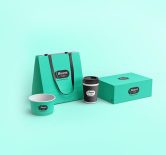



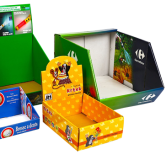

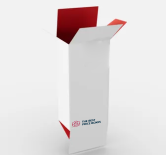

Yes, The Best Price Boxes makes custom tuck-top boxes with no minimum order, and we will beat any written quote you already have. A tuck-top box closes with a flap that folds down and tucks inside the front panel, holding shut by friction or by a small slit lock, with no glue and no tape at the point of use. What varies between one tuck-top box and the next is the bottom, and the bottom is what decides how much weight the box can carry.
Custom tuck-top box specs
| Spec | What you get |
|---|---|
| Minimum order | None. One box or a full run. |
| Top closure | Friction tuck, slit lock tuck, or a tuck with a locking tab for a firmer close. |
| Bottom options | Tuck bottom, snap lock bottom, auto bottom, or glued seal end. Each carries a different load. |
| Board | Paperboard from roughly 12 to 28 pt SBS or kraft. Corrugated E flute or B flute where the contents need cushioning. |
| Sizes | Any interior dimension. We build the dieline around your product, not the other way round. |
| Windows | Die cut window with or without a clear film patch, on the front, top or side. |
| Inserts | Paperboard platforms, dividers, molded pulp or foam. |
| Printing | Full color CMYK, Pantone spot colors, white ink on kraft, metallic foil. Inside printing available. |
| Finishes | Matte or gloss lamination, soft touch, spot UV, embossing, debossing, foil stamping, aqueous coating. |
| Ships flat | Yes. Tuck-top cartons ship and store flat and are assembled by hand in seconds. |
| Design | Free. Dielines, 3D mockups and revisions included. |
| Samples | Free. |
| Shipping | Free. |
The anatomy of a tuck-top box
Every tuck-top carton is cut from a single flat blank. Reading the dieline from the top down, you have the tuck flap itself, then two dust flaps on the side panels that fold in first and stop the contents escaping sideways, then the four main panels, then whatever bottom construction you have chosen. One vertical edge carries the manufacturer’s joint, a narrow glue tab that turns the flat blank into a tube at the converter.
Two small details on that blank do most of the work. The first is the slit lock, a pair of short cuts either side of the tuck flap that catch on the dust flaps and stop the lid springing back open. Without it, a carton with any spring in the board will lift its own lid on the shelf. The second is the tuck flap depth. Too shallow and it pops out, too deep and the flap fouls the contents. On a carton with a tight interior we shorten the tuck and add a locking tab instead.
The bottom decides everything
This is the single most useful thing to understand before you order. The top of a tuck-top box is roughly the same on every version. The bottom is not, and it is what determines the load, the assembly time and the cost.
| Bottom style | How it assembles | Load it suits | Assembly time |
|---|---|---|---|
| Tuck bottom | Flap tucks in, same as the top | Light. Cosmetics, sachets, small electronics, anything that will not push down on the closure | Fastest to set up, slowest per unit to pack |
| Snap lock bottom | Four flaps interlock in sequence, often called a 1 2 3 bottom | Moderate. Bottles, jars, candles, denser retail goods | A few seconds by hand, no glue |
| Auto bottom | Pre glued, the bottom forms itself as you square the carton | Heavy. The strongest hand assembled option | Instant. Best choice for high volume hand packing |
| Seal end | Bottom glued closed at the converter | Heaviest and most tamper evident | Nothing to assemble, but the carton no longer ships fully flat |
The mistake we see most often is a tuck bottom specified for a product that is too heavy for it. A tuck bottom relies on friction alone. Put a candle in a tuck bottom carton, lift it by the sides, and the bottom flap works loose. If your product has real mass, go to a snap lock or an auto bottom. The cost difference per unit is small. The cost of a customer catching a dropped jar is not.
Straight tuck end versus reverse tuck end
Both are tuck-top boxes. The difference is which panel the flaps hinge from.
On a straight tuck end, both the top and bottom flaps fold in from the back panel. The front face stays completely clean, with no visible flap edges interrupting the artwork. That makes it the right choice whenever the front of the box is the selling face and the design runs edge to edge.
On a reverse tuck end, the top flap hinges from the back and the bottom flap hinges from the front, or the other way round. This nests more efficiently on the printing sheet, so it usually costs slightly less per unit, and it is a little quicker to hand assemble because the two closures work in opposite directions. The trade is a visible flap edge on the front face at one end.
If you are unsure, the honest default is a straight tuck end for retail shelf products and a reverse tuck end for anything shipped inside another box where the face matters less.
Paperboard or corrugated
Tuck-top construction exists in both materials and they solve different problems.
A paperboard tuck-top carton is the classic retail box. It prints beautifully, folds crisply, and carries fine detail, foil and soft touch finishes. It offers almost no cushioning. Its job is presentation and containment.
A corrugated tuck-top box, sometimes sold as a tuck front mailer, is built from E flute or B flute board and adds a cushioning layer. It costs more, prints slightly softer because the flute shows through on large solids, and it survives being posted on its own. If your product ships direct to a customer without an outer carton, this is the version you want. If you would rather use a folding carton and post it inside an outer, look at our shipping boxes.
Board weight, in plain terms
Paperboard is measured in points, where one point is one thousandth of an inch. Twelve to 14 pt is thin and is right for a light, small carton such as a soap box or a sachet outer. Eighteen pt is the general purpose retail weight and handles most products. Twenty four to 28 pt is stiff, holds a large flat panel without bowing, and is what you want for a big or a heavy carton, or any box a customer will pick up and put back repeatedly.
Stiffness rises much faster than thickness. Going from 14 pt to 18 pt feels like a far bigger jump in the hand than the numbers suggest, which is why upgrading board is usually a cheaper fix for a flimsy box than redesigning the structure.
What a tuck-top box is not good for
It is not a shipper on its own in paperboard form. It is not tamper evident without an added seal, sticker or shrink band, because a tuck flap can be opened and closed with no trace. It is not the right structure for anything that needs a moisture or oxygen barrier. And it is a poor choice for very tall narrow products, where the tuck flap ends up far from the center of mass and the carton racks out of square.
Related packaging
Tuck-top cartons are the workhorse of retail packaging and sit alongside most of what we build. See also cardboard boxes for the wider range, cosmetic boxes where tuck tops are the standard construction, display boxes for counter merchandising, and rigid gift boxes when the product warrants a two piece build instead.
Frequently asked questions
What is a tuck-top box?
A tuck-top box is a carton whose lid closes by folding down and tucking a flap inside the front panel. It holds shut by friction, usually helped by a small slit lock. It needs no glue or tape at the point of use, and it ships and stores flat.
What is the difference between a tuck top and a seal end box?
A tuck top is closed by the person packing it and can be reopened freely. A seal end box has one or both ends glued shut at the converter, which makes it stronger and tamper evident but means it cannot be flattened for storage after filling. Many products use a hybrid, with a glued bottom and a tuck top.
How much weight can a tuck-top box hold?
That depends entirely on the bottom construction, not the top. A tuck bottom suits light products only. A snap lock bottom handles moderate weight such as bottles and jars. An auto bottom is the strongest hand assembled option, and a glued seal end bottom is stronger still. Board weight then multiplies whatever the structure gives you.
Do tuck-top boxes come with a window?
Yes. We can die cut a window in the front, top or side, with or without a clear film patch behind it. A window reduces panel stiffness, so on larger cartons we usually recommend stepping the board up a weight to compensate.
Do you have a minimum order?
No. There is no minimum. Order a single carton first to check the fit and the closure feel against your real product. Design and samples are free, so the only thing a test run costs you is time.
Can I get a tuck-top box that ships on its own?
Yes, in corrugated. A paperboard tuck-top carton will not survive the post unprotected. Built in E flute or B flute corrugated, the same structure becomes a mailer that can go out on its own.
Can you match a quote I already have?
Yes. Send the written quote with the specification and we will beat it on a like for like build. We will also flag it if the bottom style you have been quoted is too light for your product, which is the most common error we see on tuck-top quotes.
Get a quote for custom tuck-top boxes
Tell us the product, its weight, the interior dimensions or just send us the item, and whether the box sits on a shelf or goes in the post. We will come back with the right bottom construction and board weight rather than the cheapest one. Design, samples and shipping are free, and there is no minimum order.