







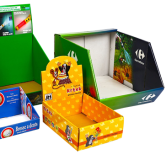
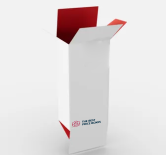

Yes, The Best Price Boxes makes custom drawer rigid boxes with no minimum order, and we will beat any written quote you already have. A drawer rigid box is two wrapped chipboard pieces, an outer sleeve and an inner tray that slides out of it, and the pull is the part that decides whether the whole thing feels expensive or awkward.
Rigid drawer box specs
| Spec | What you get |
|---|---|
| Minimum order | None. Print one to check the slide before you order a season of them. |
| Construction | Wrapped greyboard sleeve, open at one or both ends, with a wrapped tray inside it. Also called a slide box, a matchbox build or a shoulder-and-sleeve. |
| Board | Roughly 1.2 mm to 2.5 mm. The sleeve usually runs a touch heavier than the tray, because it is the part being gripped. |
| Pull | Ribbon loop through the tray end, a die-cut thumb notch in the sleeve, or a finger hole in the tray base. Ribbon is the most common and the easiest to brand. |
| Clearance | Around 1 to 2 mm of running clearance between tray and sleeve. Less binds when the wrap swells in humidity, more rattles. |
| Wrap | Printed art paper, uncoated fine paper, textured stock or cloth. Sleeve and tray can be wrapped differently, and often look better when they are. |
| Inserts | Die-cut paperboard, foam, EVA or molded pulp, set below the tray rim so nothing catches on the way out. |
| Printing | Offset litho, full color or Pantone spot. The tray interior and the tray outer walls both print, and both are visible when the box is open. |
| Finishes | Soft-touch, matte or gloss lamination, hot foil, emboss and deboss, spot UV. |
| Openings | Single-ended, so the tray only comes out one way, or double-ended for a pass-through build. |
The pull is the whole design
A drawer box has one moving part and one moment. If the customer has to shake it, turn it over, or pick at an edge with a fingernail, that moment is gone and no amount of foil on the sleeve gets it back.
A ribbon loop is the safest choice. It is visible, it tells the customer what to do without instructions, and it works with one hand. A thumb notch die-cut into the sleeve is cleaner-looking but only works if the tray sits proud enough to push. A finger hole in the tray base is the most discreet and the least obvious to a first-time user, so it suits repeat-purchase products more than gifts.
Clearance, humidity and the box that stopped opening
Tray and sleeve are both wrapped in paper, and paper takes on moisture. A box built with a hairline fit in a dry factory can bind in a humid warehouse six weeks later, and the customer meets a box that will not open.
The fix is unglamorous: leave one to two millimeters of running clearance and let the insert take up the slack instead. If your product ships to somewhere genuinely humid, say so at quote stage and we will build to the wetter end of the range.
Which way it opens matters more than you think
A single-ended drawer box only comes out one way, and whichever way that is becomes the front. On a shelf that decides which face carries your artwork and which face is the one people see when they pull it. Get it wrong and your logo ends up on the back of the sleeve.
Double-ended sleeves solve it by opening either way, which is useful for retail, and they cost you the closed end that stops the tray sliding out in transit. If you go double-ended, plan on a belly band or an outer sleeve to hold it shut.
Two drawers, and when they are worth it
A stacked two-drawer build lets you separate a product from its accessories, or a set from its documentation. It reads as considered, and it doubles your assembly. It only earns the extra when there is a genuine reason for the second drawer, not just to fill space.
What a drawer box is not right for
Anything heavy. The tray hangs on the sleeve walls while it is being pulled, and past a certain weight the sleeve deforms at the mouth. Anything tall and narrow, because the tray tips as it comes out. And anything that has to ship on its own, because the tray will work its way loose in a carrier network unless there is a band or a shipper around it.
Related rigid box styles
Compare it with a two-piece rigid box when a lift-off lid is enough, a book-style rigid box when the lid should stay attached, a collapsible rigid box when freight volume is the constraint, and small rigid boxes for jewelry and accessories. The rigid box overview puts every style side by side, and the drawer box product page is where to start a quote.
Frequently asked questions
How much clearance should there be between the tray and the sleeve?
One to two millimeters of running clearance. Tighter looks impressive on the sample and binds once the paper takes on moisture in a warehouse. The insert takes up the slack, not the fit.
Ribbon pull or thumb notch?
Ribbon if the box is a gift or a first purchase, because it tells the customer what to do without a word. Thumb notch if the look matters more and the buyer already knows the product.
Can a drawer box open from both ends?
Yes, with a double-ended sleeve. It is useful in retail where the box gets handled from either side, but nothing stops the tray sliding out in transit, so plan on a belly band or a shipper.
How heavy can the product be?
Heavier products pull the sleeve out of shape at the mouth, because the tray hangs on the sleeve walls while it is being drawn. Tell us the loaded weight and we will specify board that holds its shape.
Do you print the inside of the tray?
Yes, and it is worth doing. When the drawer is open, the tray interior and the tray outer walls are both in view, so that is three printed surfaces working at once.
Get a quote for custom drawer rigid boxes
Send the internal dimensions, the loaded weight, the pull you want, and whether the box ships on its own or inside an outer carton. We come back with a dieline, a digital proof and a quote. If you already hold a written quote for the same specification, send it and we will beat it.