

Butter paper, also sold as greaseproof paper or baking paper, is the thin, slightly translucent sheet that wraps a sandwich, lines a burger basket, or sits between layers of pastry. Printed with a logo, it turns a throwaway sheet into the first thing a customer touches. Here is what to know before ordering printed rolls.
What butter paper actually is
Butter paper is paper that has been treated so that oil does not pass through quickly. There are two common routes: a dense, supercalendered sheet that resists grease on its own, and a silicone-coated sheet that is also non-stick, sold as baking or parchment paper. They are not interchangeable. A grease-resistant wrap is fine for sandwiches and fried food. A silicone-coated sheet is what you want when the food has to release cleanly, such as baked goods and sticky items.
Where printed rolls earn their place
- Burger and sandwich wraps. Cut sheets or rolls, printed with a logo or pattern. The wrap doubles as a holder.
- Basket and tray liners. Cheap branding for dine-in service and street food.
- Bakery layers. Separating cookies, brownies, or pastries inside a box.
- Cheese, butter, and deli. Wrapping items that need a little grease protection.
Roll or sheet
Rolls suit high-volume counters where staff tear off what they need. Pre-cut sheets are faster and neater, and they stack flat in a drawer. If most of your orders are wrapped sandwiches, pre-cut sheets save seconds on every one.
Printing notes
Because the sheet is thin and light, heavy ink coverage can bleed or show through. One-color logos and repeating patterns print cleanly and read well on a translucent base. Ask for a sample before committing, since the paper color changes how ink looks. Where the sheet touches food, the printed side usually faces outward, but confirm with your printer, because ink and coating suitability for food contact depend on the specific materials.
Food-contact and labeling rules are the brand’s responsibility to confirm for the product and the state it is sold in.
Pair it with the rest of your packaging
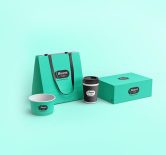
Printed paper works best when it matches the box or bag it sits in. Use the same logo, the same color, and the same typeface across the wrap, the carton, and the bag so a customer recognizes you at each step. Browse custom food boxes and custom bags to build a matching set.
Ordering
There is no minimum order at TBPB, so a small cafe can print a short run of wraps alongside boxes. Our team prepares the print layout for free, sends free samples, and ships free. If you have a lower quote for the same specification, send it and we will work to beat it.
Questions buyers ask
What is butter paper used for?
Butter paper, also called greaseproof paper, wraps sandwiches and burgers, lines baskets and trays, and separates layers of baked goods. Silicone-coated versions are non-stick and are sold as baking paper.
Is butter paper the same as parchment paper?
Not exactly. Greaseproof butter paper resists oil, while parchment or baking paper is coated, usually with silicone, to be non-stick and heat tolerant.
Can I print my logo on butter paper?
Yes. One-color logos and repeating patterns print cleanly on the thin sheet. Request a sample first, since paper color changes how ink looks.
Can I order a small quantity of printed butter paper?
Yes. TBPB has no minimum order, so you can order a short run.
Is printed butter paper food safe?
It depends on the paper, inks, and coatings used. Confirm food-contact suitability and labeling rules for your product and state before ordering.